
SEOUL, IN PETER’S WORDS · Palaces & history
An experience in temple life
Seoul has a volume control. Sometimes you find it in a temple courtyard.
Peter N. Liptak · Original guidebook essay, with dated editorial updates
Read the essay ↓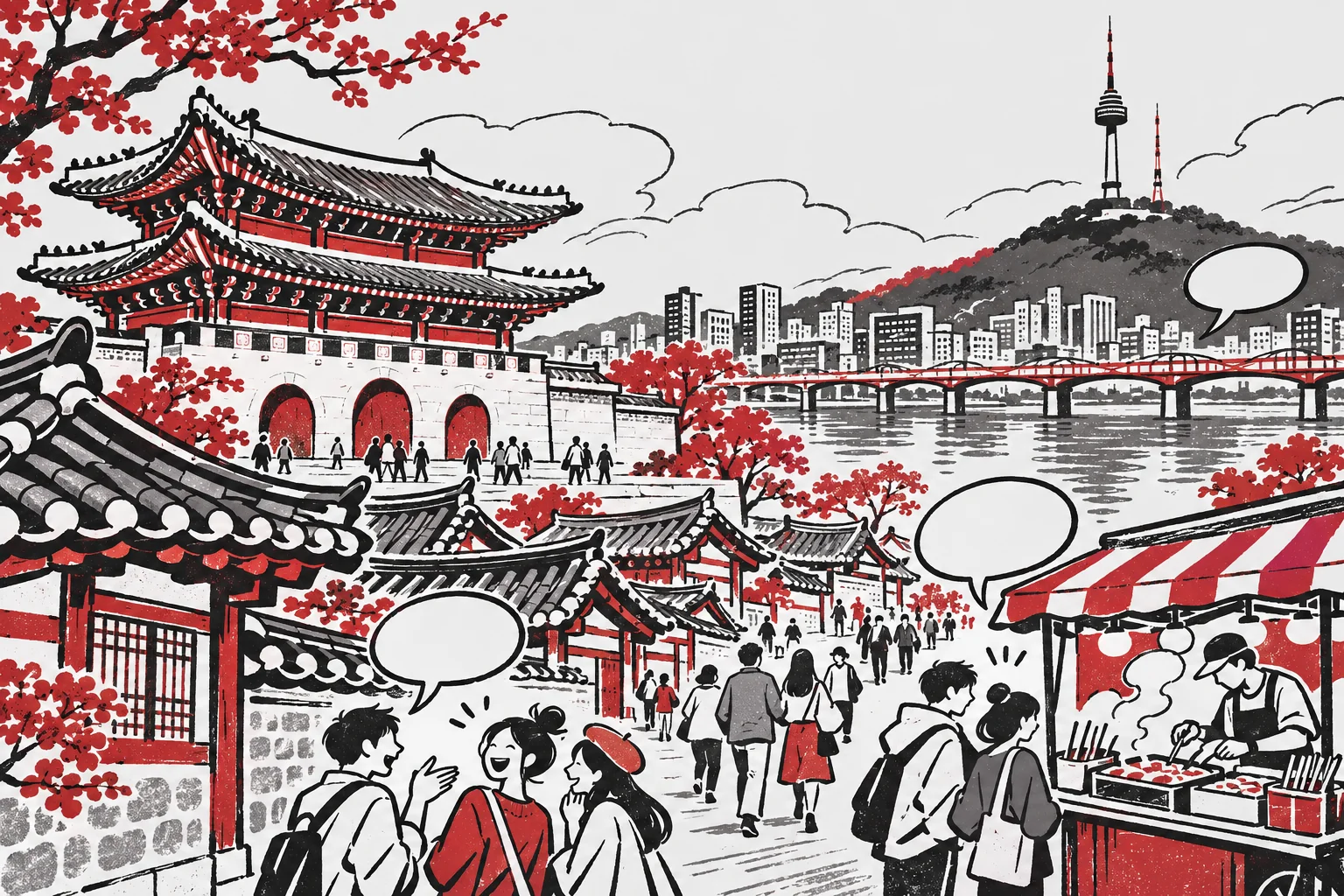
THE ORIGINAL ESSAY
Korea embraces many religions, including Christianity, Buddhism, and Confucianism. Among them, Buddhism is one of the oldest. Over a thousand years ago, the Shilla Dynasty established Buddhism as their state religion in 527 and the Goryeo Dynasty continued its patronage from 935 to 1392. As such, Buddhism became deeply rooted in the country’s history and culture.
Beautiful temples dispersed throughout the capital city hint at the prosperous days of Buddhist culture and history in Korea: Jogye Temple and Bongeun Temple, curiously hidden among high-rise buildings in the urban center, and Hwagye Temple and Gilsang Temple against the magnificent landscapes of Mt. Bukhan and Mt. Bukak. Any temple you visit will fully engross you in the remarkable landscape and serene atmosphere reminiscent of ancient Oriental paintings.
Korean Buddhism can be characterized by the term Hwajaeng. Simply translated as a ‘harmony’ where various voices may co-exist, such a spirit is reflected in the heart of Korean Buddhism. As with Roman culture, which borrowed greatly from the Greek civilization and adapted it to its own unique philosophy, Korea gave birth to a thriving Buddhist culture through harmony with the spirit of tolerance.
If you spend some time experiencing the temples of Seoul, you’re sure to attain a better understanding of Korean Buddhism, which teaches not only meditation but also how to lead a harmonious life with your neighbors, nature, and most of all, your inner-self. Even a leisurely stroll through the premises will offer a restful respite from the bustle of the city and a little of the peace of mind Buddhism seeks to attain.
From Peter’s supplied Seoul guidebook introduction, chapter 4. Original observations and historical framing are retained. PDF line-break and spacing repairs are recorded separately from factual updates. Guidebook photography and venue directories are not republished.
TAKE THE LANGUAGE WITH YOU
A city is a conversation, too.
Follow a related expression into its illustrated meaning and bilingual scene. These are informal book-sourced expressions, not a script to use with every stranger or service worker.
방콕staycation (vacation in your room); stay homeRead the book-sourced scene →Keep the whole conversation.
Keep the illustrated expressions, bilingual conversations and cultural notes together in As Much as a Rat’s Tail.
As an Amazon Associate I earn from qualifying purchases. Amazon handles regional availability and matching.
Another side of Seoul
Five hundred years of the Joseon Dynasty in Seoul
The city moves. The palace walls hold their ground.
Seoul experienced through museums
A city’s past is more interesting when you can stand in front of it.
Experience traditional culture in Namsangol Hanok Village
A little breathing room, just beyond the traffic.