
SEOUL, IN PETER’S WORDS · Palaces & history
Seoul experienced through museums
A city’s past is more interesting when you can stand in front of it.
Peter N. Liptak · Original guidebook essay, with dated editorial updates
Read the essay ↓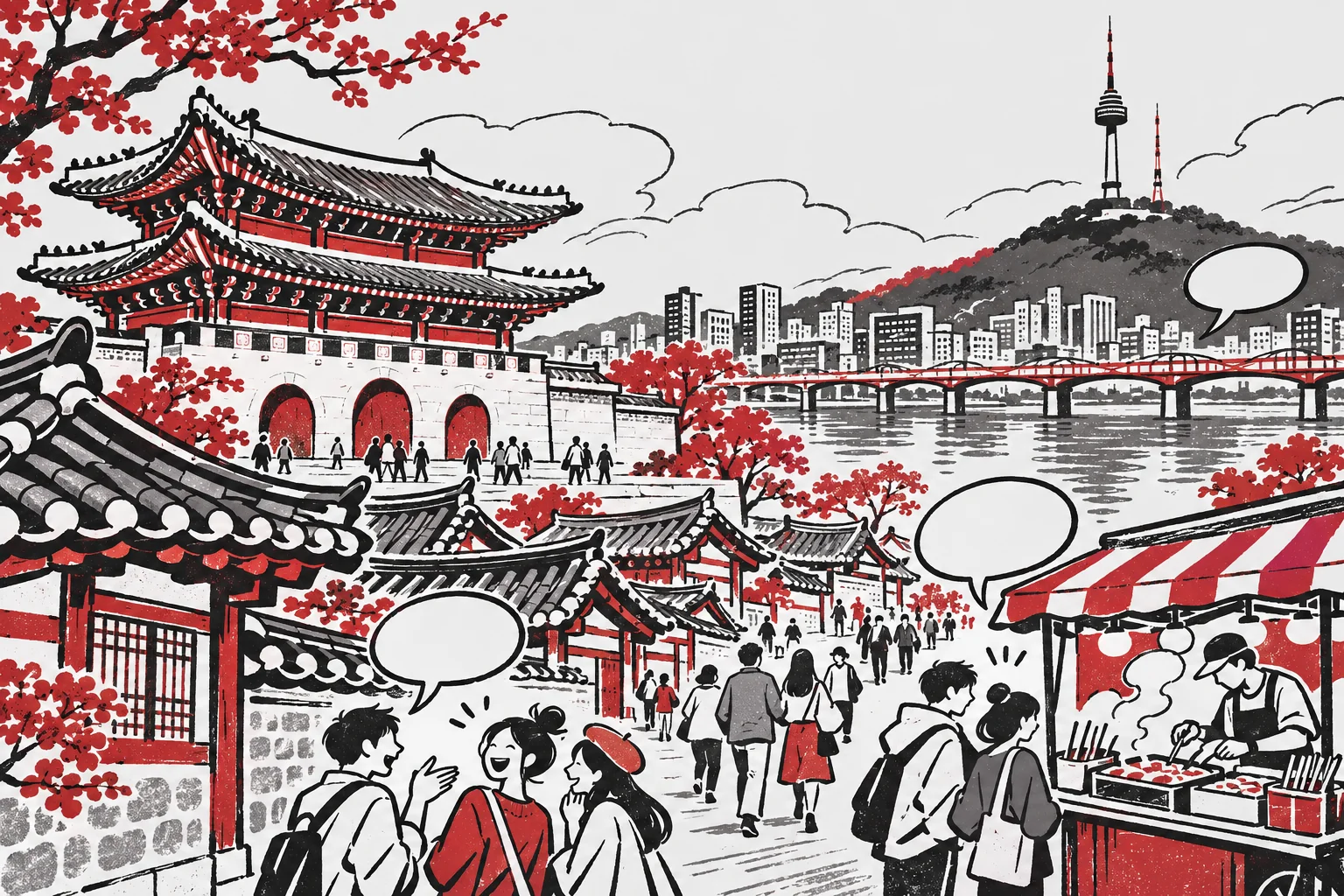
THE ORIGINAL ESSAY
If you are still filled with questions about Korea and its capital after strolling through the palaces of the Joseon dynasty, a visit to its many museums should fill in the gaps. As a national capital for six centuries, this ancient city also plays host to the National Museum of Korea and many other museums.
Located in Yongsan just north of the Han River, the National Museum of Korea will first impress you with its sheer size. It covers an area of 33-hectares (3300-acres) and accommodates an average of 20,000 visitors a day. What is more amazing is that this huge museum is filled almost exclusively with Korean relics. Here you can learn much about the source of Korean pride, its long and distinguished history.
As many of Seoul’s museums are situated around the palaces, you can often see both in one outing for a varied taste of Korea’s history and culture. You will find two superb museums in Gyeongbok Palace: The National Folk Museum exhibiting relics from everyday life such as food, clothing, and shelter; and the National Palace Museum exhibiting palace relics such as the clothes and accessories worn by kings and their retainers. Also, the Seoul Museum of History, located next to the main gate of Gyeonghui Palace, will enlighten you as to Seoul’s history and culture from prehistoric ages to the present with its various exhibits.
After the rapid economic growth of Korea’s unprecedented “Miracle on the Han,” Korea is shifting its attention to the recording and restoring of its history and culture, which had previously been somewhat neglected. In this regard, a visit to one of Seoul’s museums is more than just a view of the past; it allows you to make a first-hand observation of how Korea has changed. It is sure to provide more abundant information and inspiration than any secondhand account.
From Peter’s supplied Seoul guidebook introduction, chapter 2. Original observations and historical framing are retained. PDF line-break and spacing repairs are recorded separately from factual updates. Guidebook photography and venue directories are not republished.
TAKE THE LANGUAGE WITH YOU
A city is a conversation, too.
Follow a related expression into its illustrated meaning and bilingual scene. These are informal book-sourced expressions, not a script to use with every stranger or service worker.
뒷북치다old news; yester-sayRead the book-sourced scene →Keep the whole conversation.
Keep the illustrated expressions, bilingual conversations and cultural notes together in As Much as a Rat’s Tail.
As an Amazon Associate I earn from qualifying purchases. Amazon handles regional availability and matching.
Another side of Seoul
Five hundred years of the Joseon Dynasty in Seoul
The city moves. The palace walls hold their ground.
Experience traditional culture in Namsangol Hanok Village
A little breathing room, just beyond the traffic.
An experience in temple life
Seoul has a volume control. Sometimes you find it in a temple courtyard.