

뽀리다
[bbo-ri-da]
to shoplift; a five-finger discount
The Flashcard
The original illustrated card, front and back.

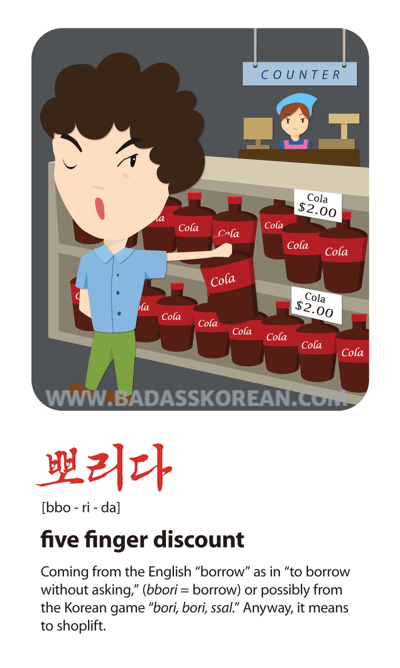
Meaning & context
이 표현의 기원은 찾지 못했다. 다시한번 제비뽑기 식의 발상으로 생각한다면, 어쩌면 이 는 borrow(물어보지 않고 빌리다)라는 영어로부터 전해진 것일지 모르겠다. 보로우 = 뽀리? 혹은 “보리, 보리, 쌀.” 이라는 한국의 놀이로부터 온 표현일지도. 어쨌든 이는 가게 에서 물건을 훔치는 것을 의미한다.
We can find no known origin of this expression. Maybe, it’s from the English for “to borrow without asking,” borrow = bbori? Again with the straws . . . or from the Korean game, “bori, bori, ssal,” where a child must grab the fist of someone when they say rice (ssal), but not when they say barley (bori) – which might be considered theft. Anyway, it means to shoplift.
From As Much as a Rat’s Tail · book pages 136–136. Original published text; historical references and usage are retained.
STORY TIME
See it in conversation
Korean
제인의 중독
English
Jane’s Addiction
야 피터, 이 Jane’s Addiction의 노래내용이 뭐야? “...내가 무엇인가를 원할 때. 그리고 지불하기는 원치않을때. 난 바로 문으로 걸어간다... 그리고 바로 문으로 걸어간다.”
Hey Peter, what is this Jane’s Addiction song about? “ . . .When I want something and I don’t want to pay for it. I walk right through the door. . . and I walk right through the door.”
물어보지않고 빌려가는것에 대한거야... 훔치는거. 해본적 있어?
It’s about borrowing without asking. . . Shoplifting. Have you?
아, 뽀리는거. 그럼, 당연하지. 다들 하는거 아니야?
Oh, you mean bborida. Yeah, hasn’t everybody?
TAKE THE WHOLE BOOK WITH YOU
As Much as a Rat’s Tail
Illustrated Korean, bilingual conversations, and the stories behind the expressions. Read here, then keep the complete book close.
Find the book Korean for lovers →