

낚다
[nakk-da]
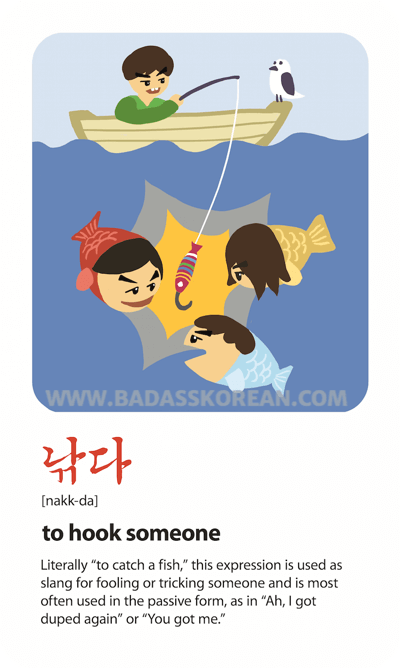
to hook someone; “you got me”
The Flashcard
The original illustrated card, front and back.

Meaning & context
문자 그대로 물고기를 낚는 것을 의미하는 이 표현은 다른 사람을 속이거나 속임 당하는 것을 뜻하는 속어이다. “아 또 낚였다”와 같이 주로 수동태로 쓰인다. 또한 농담을 하고
“낚였지?” 라고 말할 수도 있다. 이성을 침대로 꼬시거나 부유한 사람을 낚는다는 의미로
쓰일 수도 있다.
Literally “to catch a fish,” nakkda is used as slang for fooling or tricking someone. Usually used in the passive form, as in “Ah, I got duped again” or “You got me.” but can be used by the person doing the gag, “I had you going didn’t I?” (nakk-yeot-ji?). Nakkda is also sometimes used for luring a partner into bed, most often for ‘hooking’ a (wealthy) man or woman.
From As Much as a Rat’s Tail · book pages 64–65. Original published text; historical references and usage are retained.
STORY TIME
See it in conversation
Korean
만우절 생선
English
April Fools Fish
생선피, 생선 피… 시장의 세 물고기에 대해 들어본 적 있어?
Fish blood, fish blood… have you heard the one about the three fish in the market?
무슨 말 하는 거야? 낚시라도 가니?
What are you talking about? You going fishing?
낚으러 가는 거 맞아! 시장의 물고기 세마리. 빨간 생선, 파란 생선, 그리고 노란 생선의 머리가 잘려 나갔어. 걔네 피가 무슨 색깔이게? 맞히면 내가 너에 대한 노래 만들어 줄게.
Nakkda’s right! Three fish in the market: a red one, a blue one and a yellow one get their heads chopped off [ouch]. What color is their blood? Guess right, and I’ll make a song about you.
글쎄, 빨간 생선은 빨간색이겠지, 맞지?
Well, the red one is obviously red, right?
딩동! 그리고 파란 생선 피는?
Ding-dong! And the blue one’s blood?
파란색…?
Blue…?
와, 너 이거 정말 잘한다! 좋아, 이제 노래까지 한번 더!
Wow, you’re so good at this! Great job! …Now one more for the song.
그리고 노란 생선은 바닥에 노란 피를 뿌리겠지!
And the yellow one spurts --- yellow blood on the floor!
땡! 미안. 노란 생선은 붕어빵이었어. 푸하하하!
Ddeng! Sorry. The yellow fish blood is black! It’s bungobbang! Buhahaha!
아, 싸이씨… 또 낚였네! 넌 날 맨날 낚아!
Ah, Psy-shi… Again, nakkyotnae! You fool me every time!
From the book: notes & culture
The Straight Scoop
딩동 or 딩동댕 [ding-dong-dang] the sound of winning… You got it right!
땡 [ddeng] the sound of losing, like the “eeeh” of a game show buzzer. (Oddly, in another context this word can indicate a lucky break.)
붕어빵 [bung-o-bbanng] a common treat (usually for children) made with yellow waffle bread that has red bean paste inside and is formed to look like a fish.
TAKE THE WHOLE BOOK WITH YOU
As Much as a Rat’s Tail
Illustrated Korean, bilingual conversations, and the stories behind the expressions. Read here, then keep the complete book close.
Find the book Korean for lovers →