

낙동강오리알
[nak-dong-gang ori al]
a pathetic person; a sad story; an abandoned duck egg
The Flashcard
The original illustrated card, front and back.

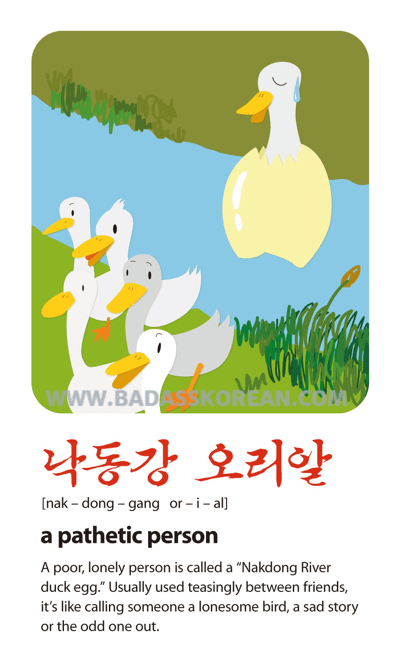
Meaning & context
낙동강, 부산 외곽을 감싸고 있는 강으로 한국 전쟁 시작 직후 마지막 방어선이었던 곳. 한 반도의 가장 밑부분, 아무것도 없는 작고 외로운 막다른 지역이 수비를 위한 지역이 되었 다. 불쌍한 낙동강 오리알 같은. 그래서 매우 불쌍한 외로운 사람을 낙동강 오리알이라고 부른다(보통 친구들 사이에서 장난 칠때 쓰인다). 비슷한 영어식 표현으로는 “Here I sit
like a bird in the wilderness” 가 있다. The Nakdong River, on the outskirts of Busan, was the last line of defense for the South Korean and US forces shortly after the beginning of the Korean War. Driven to the very bottom of the peninsula, there was nothing but a small, lonely section left to defend; a ‘poor, duck egg’ of sorts. So a poor, lonely person is called a nakdonggang orial or a Nakdong River duck egg (usually used teasingly between friends); a lonesome bird of sorts. Somewhat similar to the English expression: “Here I sit like a bird in the wilderness.”
From As Much as a Rat’s Tail · book pages 60–61. Original published text; historical references and usage are retained.
STORY TIME
See it in conversation
Korean
강 알 시
English
Ode to a River Egg
서울을 유랑하다
In my stroll through Seoul
낙동강 오리알을 보았네.
I saw a nakdonggang ori-al
돌담에 기대어 자리잡고있는
Perched against a wall
구멍 안에 감춰져 있는
Of stone, almost hidden in a hole
어둠의 그의 슬픔을 통하여
Of darkness, sifting through his sadness
여자는 그 남자를 미치게 만들고
A woman near driven him to madness
친구, 나는 너를 그렇게 부른다
Friend, I called out, what troubles you so
무슨 문제가 있어 넌 알이 된거니
To make an egg of you, though
기쁨에 가득찬 뜨거운
Yesterday, we reveled in the heat
연회를 즐겼지만 넌 그녀를 만나지 못한거니?
Of your joy that you did her meet?
그녀는 나에게 전화를 하겠다고 약속했지만
“She made me a promise to call
전화는 오지 않았고 나는 지금 낙동강 오리알
But didn’t and now I am a nakdonggang ori-al.”
TAKE THE WHOLE BOOK WITH YOU
As Much as a Rat’s Tail
Illustrated Korean, bilingual conversations, and the stories behind the expressions. Read here, then keep the complete book close.
Find the book Korean for lovers →