SEOUL, IN PETER’S WORDS · Food & markets
The traditional markets of Seoul
Pull up a stool. The market has a lot to say.
Peter N. Liptak · Original guidebook essay, with dated editorial updates
Read the essay ↓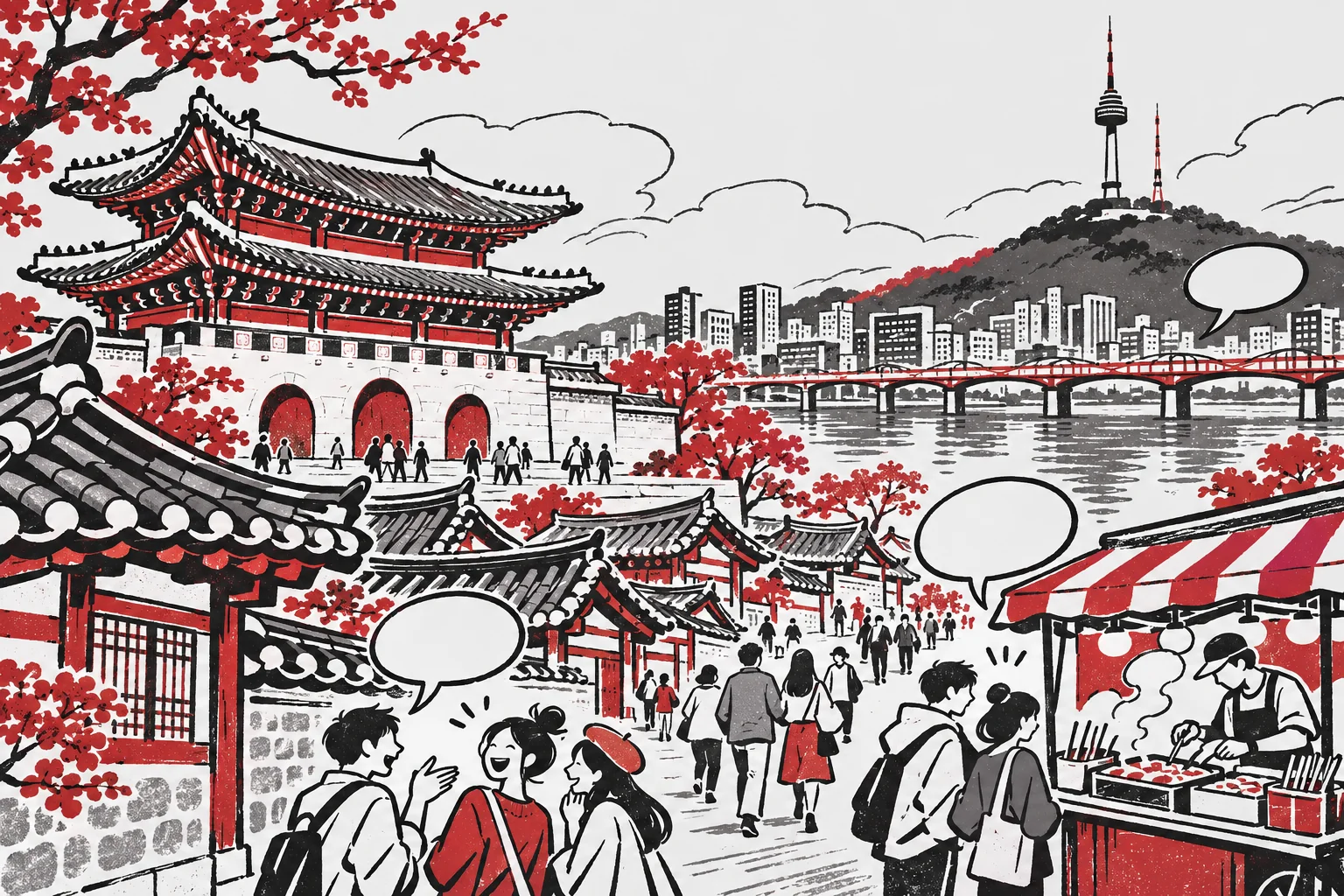
THE ORIGINAL ESSAY
The traditional markets of Seoul can be likened to a huge playground. They are characterized by children clinging to the skirts of their moms, the boisterous voices of merchants touting their products, buyers bargaining about price, and merchants’ giving service, a kind of generosity gift as a thank you to the resolution of a mutually beneficial deal.
Though large supermarket chains have long since opened in Korea with its economic development, traditional markets still maintain a solid presence in various parts of Seoul. They have strengths such as low prices, the fresh quality of food, and the good-hearted hospitality that large supermarkets often lack.
Gyeongdong Market is the most characteristic traditional market in Seoul. Here, you can buy agro-livestock products at discounted prices. It also specializes in the sale of cheap and efficacious oriental medicine herbs, so a visit to this market is essential if ginseng is on your shopping list. Ginseng has remained the most popular gift item for travelers to Korea throughout its history. Korea’s climate and soil are famous for being the most suitable environment in the world for growing ginseng.
Weary shoppers with tired legs and empty stomachs need not search for a restaurant or food court as street vendors swarm the market. Just grab a stool at any of the nearby open air stalls and order what you see. If you wish to taste Korea’s unique market food, drop in at Gwangjang Market where hanbok shops cluster together.
There are other traditional markets you should not miss: Noryangjin Fisheries Market selling fresh marine products; Jungbu Market offering salted, smoked fish at cheaper prices; and Gwangjang Market lined with dry goods stores. A visit to these clamorous traditional markets packed with merchants and crammed with customers, will make you feel closer to the true Korea.
From Peter’s supplied Seoul guidebook introduction, chapter 6. Original observations and historical framing are retained. PDF line-break and spacing repairs are recorded separately from factual updates. Guidebook photography and venue directories are not republished.
TAKE THE LANGUAGE WITH YOU
A city is a conversation, too.
Follow a related expression into its illustrated meaning and bilingual scene. These are informal book-sourced expressions, not a script to use with every stranger or service worker.
뽕빼다get your money’s worthRead the book-sourced scene →Keep the whole conversation.
Keep the illustrated expressions, bilingual conversations and cultural notes together in As Much as a Rat’s Tail.
As an Amazon Associate I earn from qualifying purchases. Amazon handles regional availability and matching.