

The Flashcard
The original illustrated card, front and back.
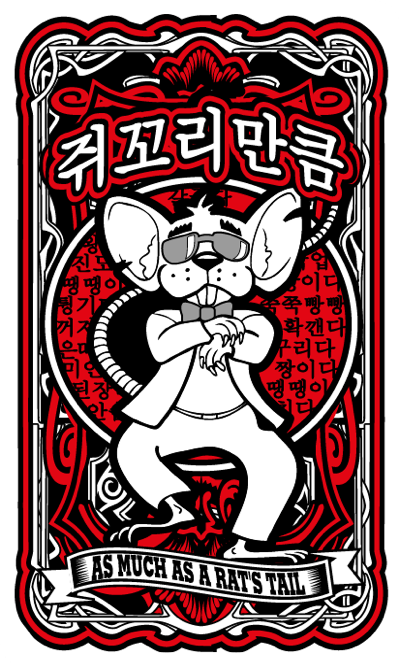

Meaning & context
‘동갑’이라는 단어가 줄여져, 같은 해에 태어났음을 의미하는 말이다. 특히 한국인들에게
는 동갑이면 대체 서로 친구로 지낸다.
Shortened from the Korean donggap (동갑), gabita describes people born in the same year. Such peers enjoy special relationships (read – instant friendship) in terms of closeness and social equality, which allows them to speak in less formal language to each other.
From As Much as a Rat’s Tail · book pages 12–12. Original published text; historical references and usage are retained.
STORY TIME
See it in conversation
Korean
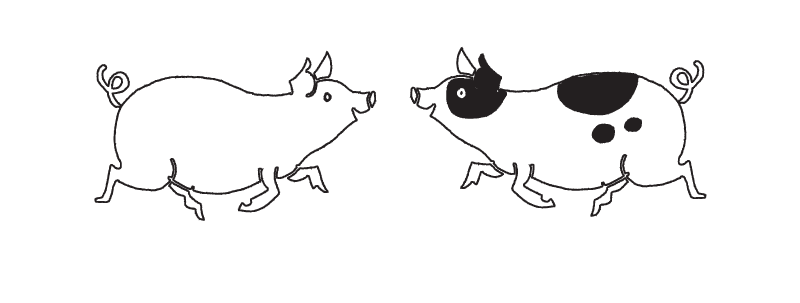
클럽의 돼지 두마리
English
Two Pigs at a Club
안녕하세요~ 여기 나이트 자주 오세요? 몇년생이세요?
Hello, do you come to ‘night’ (clubs) often? What year were you born?
가끔 와요. 저 83년생이요.
I come often. And I was born in 83.
83년생? 돼지띠? 나도 돼지띠인데. 우리 갑이다. 좋다! 반말하자.
Born in 83? I’m a pig too. We’re gapida. Great! Let’s speak banmal.
From the book: notes & culture
The Straight Scoop
반말 [ban-mal] to speak comfortably, using low or informal language.
A side of Panchan
%
Jjang-Heol-Gwang

RAT RATING


반말 [ban-mal] to speak comfortably, using low or informal language.

The Year of Speaking Plainly
Koreans place a great deal of importance on age in language, divid- ing people into groups of those older than them (who they must speak to with respectful or formal language ~ jondaetmal (존댓말)) and those younger than or the same age as them (who they may speak to with ban- mal (반말)). As such, Koreans have a special affection for someone their own age, sharing a common year in school, a common Chinese zodiac sign, ddi (띠), and more.
TAKE THE WHOLE BOOK WITH YOU
As Much as a Rat’s Tail
Illustrated Korean, bilingual conversations, and the stories behind the expressions. Read here, then keep the complete book close.
Find the book Korean for lovers →