

The Flashcard
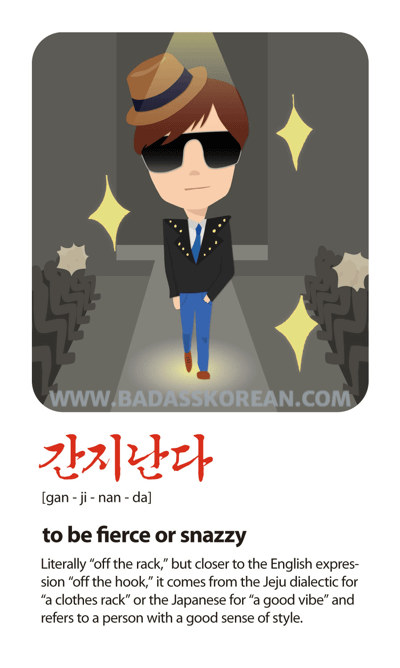
The original illustrated card, front and back.

Meaning & context
제주도의 방언에서 유래한 것으로 생각된다. 제주도에서는 이 간지라는 단어가 ‘횃대’를 의미했다. 이 횃대는 옷걸이를 의미하는데 옷태가 잘 나거나, 옷입는 스타일에 감각이 있 는 사람을 보고 이 말을 쓴다.(또한 간지는 느낌을 의미하는 일본어로부터 유래되어졌다 고 추측되기도 한다.)
Literally “off the rack,” but closer to the English slang expression “off the hook.” Ganji (간지) is Jeju dialectic for hoidae (횃대), which means a coat hanger or clothes rack, and is used here to represent a person with a good sense of style as if a voguish sample on a mannequin or a clothes rack. (Ganji may also come from the Japanese word for feeling, as in to make a favorable impression.)
From As Much as a Rat’s Tail · book pages 10–10. Original published text; historical references and usage are retained.
STORY TIME
See it in conversation
Korean
간지난 놈
English
Off the Hook
너 간지난다! 오늘 어디 가?
Wow, you look ganjinanda. You going somewhere today?
하하 오늘 입사면접이 있어서 신경 좀 썼어.
Ha, ha, my interview’s today so I put some effort into it.
잠깐만! 그 옷들 어디서 났어?
Wait a minute! Where did you get those clothes?
네 침실 안 옷걸이에 걸려 있었어. 왜, 너 이거 안 입잖아?
Off the hook in your bedroom. Why? You weren’t using them.
내 옷걸이에? 음, 그럼 나도 그 옷 입으면 간지나겠다.
Off my hook? Well, I guess that makes me ganjinanda too.
그거는 “off the hook!”이다.
That’s “off the hook!”
The Rice of Life
%
Jjang-Heol-Gwang

RAT RATING
Quote of the Day
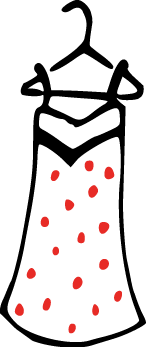
“그 간지난 놈은 드레스를 입어도 사내다운 남자와 같이 보일수 있어요! !”
“That fierce bastard could put on a dress and still look like a real man!” ~ the jealous ones
Be I amazing?… Yeah, baby! I is!
TAKE THE WHOLE BOOK WITH YOU
As Much as a Rat’s Tail
Illustrated Korean, bilingual conversations, and the stories behind the expressions. Read here, then keep the complete book close.
Find the book Korean for lovers →